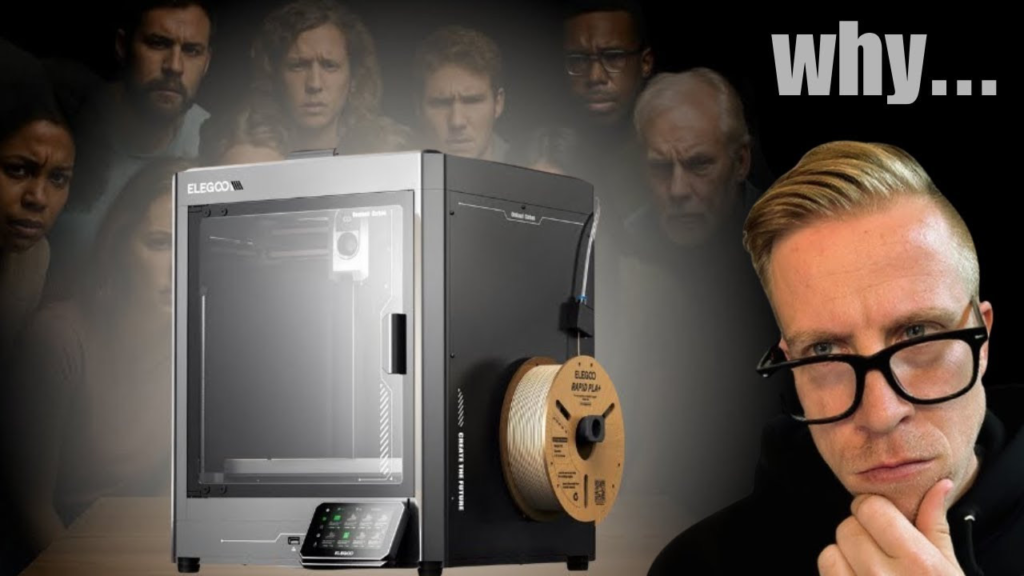
If you're looking for a Centauri Carbon dry box, there are some really cool options you can actually 3D print yourself. A dry box lets you keep the filament protected from moisture while still feeding it directly into the printer.
Why Use a Dry Box?
Filament absorbs moisture from the air, especially materials like PETG, TPU and nylon. Wet filament can cause stringing, popping, rough surfaces and inconsistent prints.
A dry box basically lets you leave the spool on your Centauri Carbon without leaving the filament completely exposed to the room.
3D Printed Centauri Carbon Dry Box
One of my favorite options is a side-mounted dry box designed specifically for the original Elegoo Centauri Carbon. It uses the printer's existing spool mounting location, so the whole setup looks much cleaner than having a separate box sitting next to the printer.
There are also simpler designs that basically create a cover around the spool and use magnets to attach directly to the Centauri Carbon. One popular design takes around five hours to print and can use a gasket to help keep moisture out.
Here are some cool models – https://www.printables.com/search/all-models?ctx=models&q=centauri+carbon+dry+box
Add Desiccant
I'd definitely throw some silica gel or rechargeable desiccant inside whichever dry box you use. Some Centauri Carbon dry-box designs even have dedicated desiccant compartments and spots for a small hygrometer so you can actually see the humidity inside.
Just remember that a dry box and a filament dryer aren't necessarily the same thing. A basic dry box is mainly designed to keep already-dry filament dry. If your filament has already absorbed a bunch of moisture, I'd dry it first and then move it into the dry box.
Overall, a Centauri Carbon dry box is one of those upgrades that's actually useful, especially if you leave filament loaded on the printer for days at a time.